
MICROeconomics
Microeconomics is the study of individual markets, firms, organisations, groups, and individuals. This 9-week course is designed to provide you with a working knowledge of microeconomics and to assist you in making informed choices between competing approaches. We cover the traditional microeconomic framework which is still very dominant in influencing public and social policy – and so deserves our careful attention for that reason alone. However, that framework has some severe limitations and so we spend just as much of our time surveying alternative frameworks and the different policy implications that flow from those frameworks. I
Design: first view a pre-recorded online lecture at a time and place convenient to you, then undertake some suggested reading and then participate via zoom or in-person in a weekly 90 min discussion (with a short break at the 45 minute mark) where we discuss some preset questions and you pose your own questions, comments and critiques. Tutorial sizes have a maximum upper limit of 19 people (and in practice are typically less) in order to generate a conversational, easy-going and genuinely interactive experience. The lectures and readings are all downloadable and may be done whenever you like. The lectures can either be viewed, or simply listened to as podcasts. On-one-one help is provided whenever you need to clarify anything.
At its core, this is an introductory subject. However, there will be extra readings and discussion questions that are more in-depth. Whilst we can’t go through these intermediate materials in the regular weekly discussion sessions (it just wouldn’t work), two weekly online drop-in sessions will be run where we can work through these extra materials as required. These sessions will be scheduled via an online poll of those students of those who wish to engage with additional learning materials. In other words, you will have the option to simultaneously study microeconomics at both an introductory and intermediate level.
Dates and times.
The Subject commences in Term 2 in the week commencing Sun 19th April. At this point, there will be two options to choose from for weekly discussions.
Option1. In person. Tuesdays 6 to 7.30pm at Prosper, Level 1, 64 Harcourt Street, North Melbourne, Australia
Option 2. Zoom. Thursdays 6 to 7.30pm, Australian Eastern Standard Time (UTC+10 hrs)
It is often possible to offer additional options that may be more suitable to people operating in different time zones. If you are interested in exploring this idea, submit an expression of interest (EOI) and in doing so, indicate what days and times would suit you. Through collating a few EOI’s, it may well possible to to run another weekly discussion at a time that suits you.
Cost (major currencies are listed below, contact us for costs in other currencies)
Australian Dollars AUD$275.00
US Dollars US$190.00
Euros EUR160.00
UK Pounds GBP145.00
Canadian Dollars CAD$260.00
Payment can be made via electronic funds transfer, credit card, paypal or money order.
Refunds: If you attend the first class and find that for some reason it is not what you are seeking then we can provide you with a (no questions asked) full refund – provided that we are notified within 7 days of your payment.
Assessment: There are regular questions and answers to allow you to self-test your knowledge, but the results of such self-tests are only available to you. Tutorial discussions are also a great opportunity to test and clarify your ideas. You can also get one-on-one assistance via email, phone or zoom when you need to confirm or clarify any aspect of the course.
Accreditation: If you attend at least 7 of the 10 classes, we can upon request issue you with a record of completion which you are welcome to list on your CV.

Week 1. Getting Started with Microeconomics
We introduce all the basic concepts in this week to get you up and running with microeconomic analysis: supply, demand, equilibrium, elasticity, income versus substitution effects etc. These concepts are relevant to all competing microeconomic frameworks, albeit sometimes in quite different ways. Even if you feel familiar enough with these foundational concepts you may find that are more intellectually honest and balanced account of their construction to breathe new life and interest into them.

Week 2. Understanding Choice
Here we look at how consumers are understood to make decisions across multiple schools of economic thought: neoclassical, behavioural, institutional and Post-Keynesian. We look at the distinction between risk and uncertainty and different forms of rationality, and rule-based versus calculative (optimising) behaviour.

Week 3. consumption and The Household Sector
The focus here is on concepts like consumption functions, the origin of preferences, the social nature of consumption, the choice between work and leisure, the supply of labour, and the household as both a site of consumption, production and reproduction.
Week 4. Firms and Production
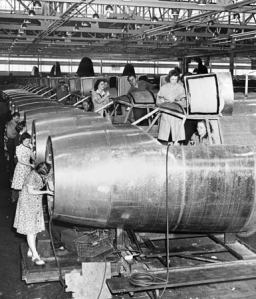
The focus here is on how firms produce things, why firms exist. How firms price their products is given particular attention and we compare and contrast theories of price based on marginal calculation versus follow mark-up rules of one type or another. We also look at how competition, cooperation, coordination and innovation are understood within rival theories of the firm.

Week 5. welfare economics
Welfare economics is concerned with how economists identify what does (and does not) constitute an improvement to societal welfare. Within orthodox economics the key concepts are pareto efficiency and related spin-offs such as Hicks-Kaldor efficiency. We evaluate the adequacy of such frameworks for twenty-first century societies and also survey some alternative measures of economic and social progress.
Week 6. cost-benefit analysis
Cost-benefit remains central to much applied economic analysis. We first explain the basic approach before undertaking a case-study of cost-benefit analysis in practice. Guided readings and study plans are available for those who would like to dig deeper into this area. These readings and study can be bespoke designed and thus include coverage of alternatives to standard cost-benefit analysis and /or building your capacity to undertake your own cost-benefit analysis.

Week 7. post-walrasian economics
One of the limitations of orthodox analysis is the use of strongly unrealistic assumptions. Post-Walrasian economics reject two of these assumptions: (1) that we have fixed/given preferences and (2) that a complete legal contract that can be enforced without cost governs all economic exchanges. Relaxing these assumptions allows for some incorporation of power into economic analysis (among other benefits). In this first week of Post-Walrasian Economics we introduce the basic framework noting both its strengths and weaknesses as an alternative microeconomics
Week 8. GAME Theory
Whilst adjacent to, rather than part of neoclassical economics, game theory has becoming increasingly central in microeconomic analysis. The focus here is to introduce some of the more well-known games within economics but to also note some of the tensions, controversies of a game-theoritic approach to the economic and social world.

Week 9. A Microeconomic Case StudY