
Description: This nine-week course (which runs in quarters 1 and 3 each year) offers a pluralist introduction to political economy and economics. We examine nine competing schools of thought, each of which offer an original and distinctive illumination of economic reality. The course is tertiary (i.e. university level) in nature and teaching staff are both highly qualified and experienced (for more information see here). However, you do not need to be connected to a university or to have previously studied political economy or economics to enrol. The approach is friendly and informal, rather than stuffy or pretentious.
Design: Each week you view (or listen as a podcast) to a pre-recorded lecture (at whatever time suits you). You then undertake some suggested reading, and then participate in a weekly 90-minute tutorial (which has a 5-minute break halfway through) where we discuss set questions and also field any questions and comments you might have. Tutorial sizes have a maximum upper limit of 19 people in order to generate a conversational, easy-going and genuinely interactive experience. That said, nobody is put on the spot to field specific questions in tutorials, and you can engage with the tutorials (and the subject itself) in the manner, and in the depth that suits you. One-on-one help is provided whenever you need to clarify anything.
Weekly Tutorial Options: As part of the registration process, you can choose between a range of options for the weekly tutorial. All tutorials start in the week commencing 12th July 2026.
Australia
- Mondays 6pm-7.30pm in person at Prosper, Level 1/64 Harcourt Street North Melbourne.
- Tuesdays 6pm-7.30pm Australian EDT (UTC+11hrs) via zoom.
North America
- Mondays 6-7.30pm North American Eastern Time (UTC-5 hrs) via zoom.
United Kingdom/Europe
- Tuesdays 8-9pm UK Time (UTC+0 hours) via zoom.
Click here to convert any of the above stated times to another time zone. Additional tutorials can be scheduled that better suit those based in different time zones. It just requires a few people to agree on a suitable time. Accordingly, feel free to submit and expression of interest that indicates what days and times would suit you and hopefully we organise a a tutorial that suits you and a few other people.
Enrol in the next iteration of this subject (starting Term 3 13th July 2026)
If this coming term does not suit you, click here to lodge an expression of interest for Term 3 (starting 13th July 2026) and we will let you know when enrolments open.
Cost (major currencies listed below, please contact us for costs in other currencies)
Australian Dollars AUD$275.00
US Dollars US$190.00
Euros EUR160.00
UK Pounds GBP145.00
Canadian Dollars CAD$260.00
Payment can be made via electronic funds transfer, credit card or PayPal. All students are eligible for a full (and no questions asked) refund if they change their mind about undertaking the course provided they can provide notification within 10 days of registering.
Assessment: There are regular questions and answers to allow you to self-test your knowledge, but the results of such self-tests are only available to you. Tutorial discussions are also a great opportunity to test and clarify your ideas – though nobody will put you on the spot by specifically asking you to field particular questions in the discussion sessions. As already mentioned, you can get one-on-one assistance via email, phone or zoom to confirm (or clarify) any aspect of the course.
Accreditation: If you attend at least 7 of the 10 classes, we can issue you with a record of completion which you are welcome to list on your CV.
Week 1 institutional Economics
It is sometimes imagined that the economy is a system of markets when it is in fact a system of institutions (i.e. formal and informal rules). Whilst the market is definitely a central economic institution, it is necessarily nested inside other institutions and these other institutions exert a profound influence over how markets work. Institutionalism is an excellent way to start our intellectual journey. It is very much economics as social science and is as illuminating as it is accessible.

Week 2 Behavioural economics
Behavioural economics brings psychological insights and methods into economic decision making. A major and consistent finding of this school of thought is that our decision making is often surprisingly irrational. We consider what policy implications result from our regularly poor decisions, including contemplating the use of behavioural ‘nudges.’ We also contemplate how behavioural economics might (and might not) improve various real world outcomes.

Week 3 austrian economics

Week 4 neoclassical Economics
Neoclassical economics (sometimes called ‘mainstream economics’ or ‘traditional economics’ or ‘orthodox economics’) is something every political economist and economist needs to be familiar and confident with. Here we present neoclassical content in an accessible manner by focusing on understanding and evaluating the underlying ideas – rather than getting bogged down in technical or mathematical details. If you are seeking to better understand (and better evaluate) the way economists make sense of the world, this material should be both interesting and of practical use to you.
Week 5 Post Keynesian economICS
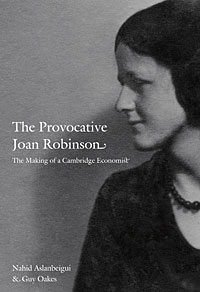
We look at the often misunderstood ideas of J M Keynes, particularly his very important ideas concerning the fundamental uncertainty of the future, and the role of money in a market economy. We explain the difference between the Keynes as understood in neoclassical (orthodox) economics versus Keynes’ ideas as expressed in his own writings. We also contemplate the role that Keynesian ideas could play in confronting contemporary challenges such as economic instability, stagnation, inequality and environmental constraint. Key thinkers in the Post Keynesian tradition include not just Keynes but Michael Kalecki, Joan Robinson (pictured left) among many others.
Week 6 Marxian political economy
Week 7 GEORGIST economICS
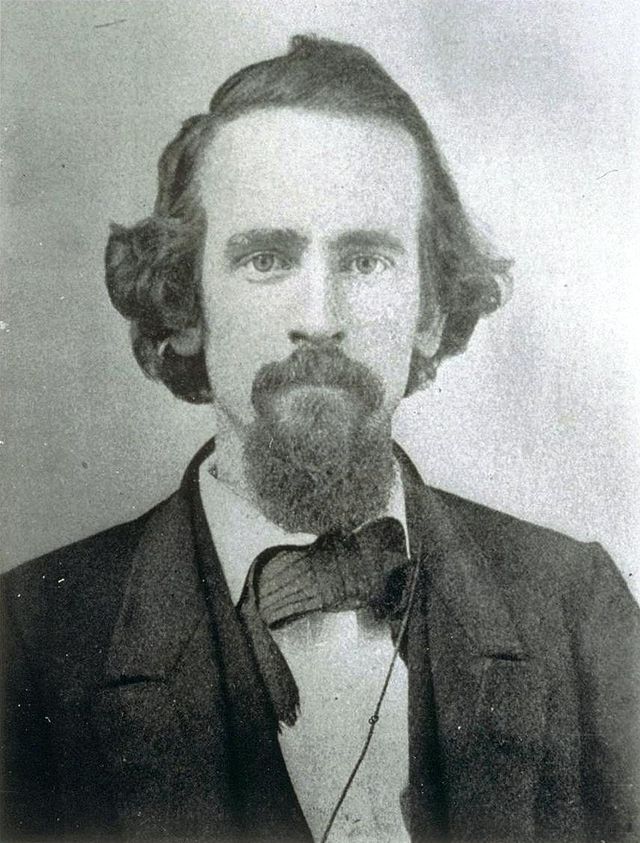
Classical political economists such as Adam Smith and David Ricardo accorded land special status in economic theory. George extended this work and was a particularly effective and influential advocate for greater taxation of land. If you are interested in issue of housing affordability and inequality of wealth and income you will find much to engage with in Georgist ideas.

Week 8 Feminist economICS
Feminist economists make a number of important contributions to our understanding of economic and social reality. In particular, they offer often striking illumination of recurrent and often quite serious gender blind-spots that can distort the world and our analysis of it. In this week we will examine the key ideas in feminist political economy, including the policy implications they carry.
Week 9 ecological EconomICS
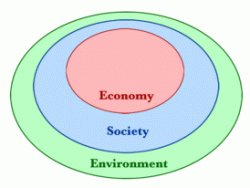
Ecological economics is an interdisciplinary or transdisciplinary area of knowledge whose foundation stone is the recognition that the economic system sits inside a social system which in turn needs to exist inside the opportunities and constraints of an environmental system. We examine the key ideas and figures in this school including debates between advocates for de-growth and green-growth.O